When Does Claude Code Usage Reset? Complete Reset Schedule Guide

If you use Claude Code regularly for software development, one question eventually becomes unavoidable: when does Claude Code usage reset?
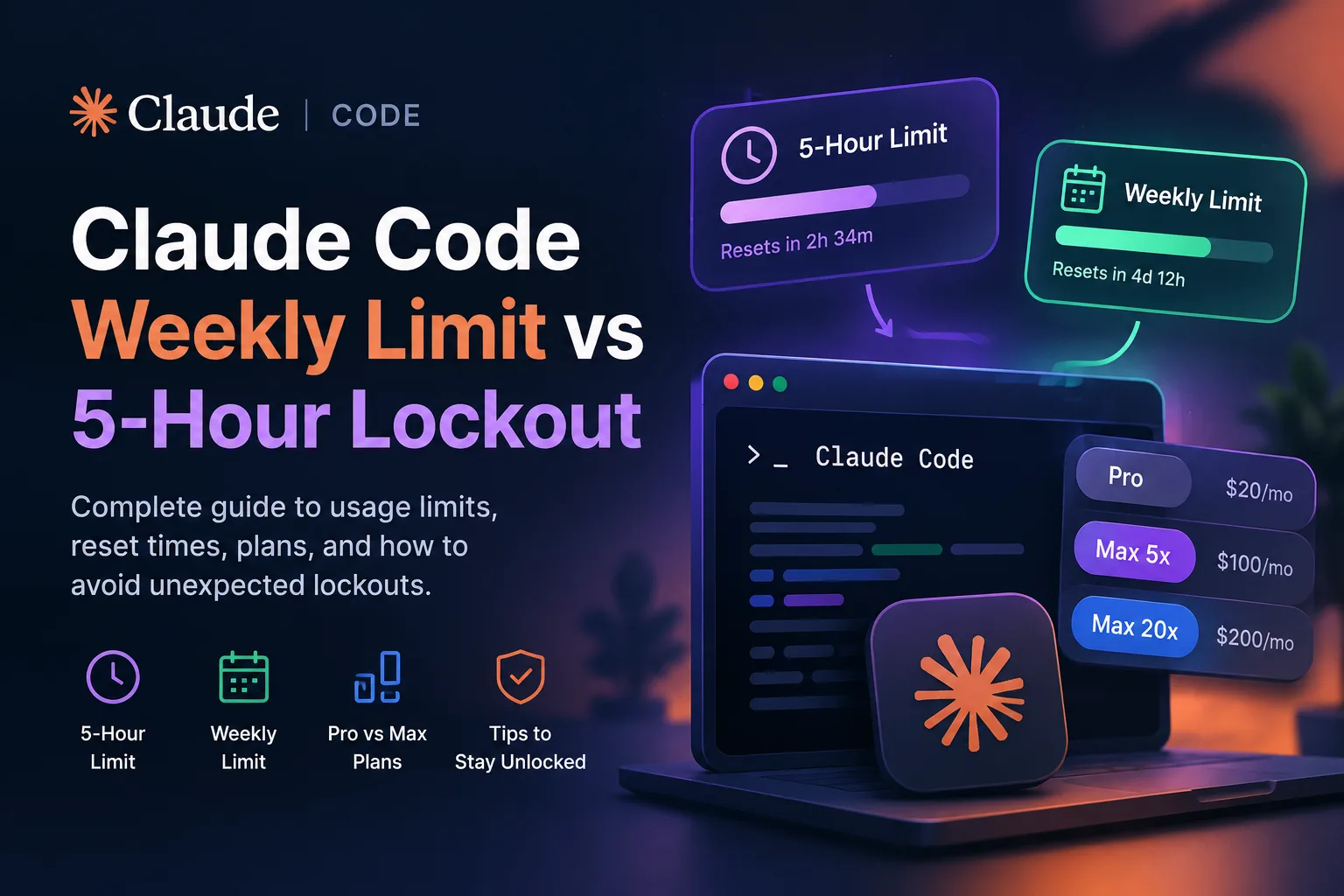
The answer is slightly more complicated than simply saying “every five hours.” Claude Code usage is tied to the Claude plan and account you use, and different types of limits can apply at the same time. For Pro and Max subscribers, there is a five-hour session-based usage limit, while paid plans can also have weekly usage limits. Claude Code usage is also shared with Claude across supported interfaces when you are using the same subscription.
This guide explains how the Claude Code reset schedule works, what “five-hour reset” actually means, where to check your next reset, what happens when you reach your limit, and how to get more useful coding time from your available quota.
Quick Answer: When Does Claude Code Usage Reset?
For Claude Pro and Max users, the primary Claude Code usage limit resets every five hours. However, this should not be confused with a fixed daily reset at midnight or a reset that occurs at the same clock time every day.
Your session-based limit is associated with your usage window. When you reach the limit, Claude can show you the exact time at which your access will become available again.
There is also another important limitation: weekly usage limits. These are separate from the five-hour session limit and reset at a fixed time assigned to your account. Your weekly reset time does not change simply because you started using Claude at a different time.
In other words:
Limit typeReset scheduleSession usageEvery 5 hoursWeekly usageFixed weekly time assigned to your accountAPI usageDepends on API billing/rate limitsContext/length limitNot a usage reset; start a new conversation or compact context
The exact amount of usage you receive isn't simply a fixed number of messages. Claude says usage can vary according to factors such as message length, conversation length, model selection, tools and other features.
How the Claude Code 5-Hour Reset Works
The most important thing to understand is that Claude Code does not operate on a traditional daily quota.
Suppose you start an intensive coding session in the afternoon and eventually reach your usage limit. Claude will tell you when the five-hour usage period becomes available again.
For example, imagine you are working on a large project and use Claude Code heavily between 1:00 PM and 3:00 PM. If you subsequently hit your session limit, the interface can display a message such as:
“5-hour limit reached - resets [time].”
Anthropic specifically documents this warning and reset message for users who reach their usage limit.
This means you shouldn't assume that your quota will automatically return at midnight.
The practical rule is simple:
Claude Code usage resets on a five-hour session cycle, not at midnight.
Does Claude Code Reset Every 5 Hours From Your First Prompt?
This is where things can become confusing.
The five-hour limit is described by Anthropic as a session-based usage limit. When you reach that limit, Claude displays the time when you can use the service again. The exact consumption is affected by how much you ask Claude to process rather than simply counting individual prompts.
For that reason, it is better not to think of Claude Code as:
“I get exactly X messages every five hours.”
Instead, think of it as:
“I have a usage allowance within a five-hour window, and the amount I consume depends on what I'm doing.”
A simple coding request can consume considerably less usage than asking Claude to inspect a large repository, reason about a complicated architecture, modify numerous files and run several tools.
What Counts Toward Claude Code Usage?
One of the biggest misconceptions about Claude Code is that only the text you type counts.
Claude explains that usage is influenced by several factors, including:
- The length of your prompts
- The size of your conversation
- Files Claude needs to process
- The model you're using
- Tool usage
- Multi-step tasks
- Extended reasoning or effort settings
- Other features used during the interaction
Claude Code also sends project context and previous conversation context to the model, which can make long-running sessions more expensive in terms of usage.
This is particularly important for developers.
Imagine you start with a simple request:
“Fix this login error.”
Then, over the next several hours, the conversation grows to include dozens of files, debugging logs, architectural discussions and multiple code changes.
Your later requests may require Claude to process substantially more context than the original request.
That is one reason why starting a fresh conversation can sometimes make your available usage go further.
Does /clear Reset Claude Code Usage?
No.
This is an important distinction.
The /clear command starts a new conversation by removing the existing conversation history. It does not reset your account's five-hour usage allowance. Claude's documentation recommends /clear as a way to reduce unnecessary context when switching to a new task, but it isn't a quota-reset command.
Think of the two concepts separately:
Usage reset:
Controlled by your account's usage window.
Conversation reset:
Controlled by commands such as /clear.
Using /clear can help you use your available quota more efficiently, but it doesn't give you a new five-hour allocation.
What About /compact?
/compact is another useful command, especially during long coding sessions.
Instead of completely removing the conversation history, Claude Code can summarize the existing conversation so that important information is retained while reducing the amount of context that needs to remain active.
This is particularly useful when you're halfway through a complicated task and don't want to lose the previous discussion. Claude recommends /compact for continuing a long task, while /clear is better when moving to a completely different task.
Again, however:
/compact does not reset your usage limit.
It is a context-management tool, not a quota-reset tool.
Does Claude Code Have a Weekly Usage Reset?
Yes.
For Pro and Max plans, Anthropic also maintains weekly usage limits. These limits are separate from the five-hour session limit.
The weekly limit resets at a fixed time assigned to your account. Importantly, the reset time doesn't move simply because you subscribed on a particular day or started using Claude at a particular time.
This creates two different clocks:
1. Five-hour usage clock
This governs your short-term session allowance.
2. Weekly usage clock
This governs your longer-term weekly allowance.
That's why waiting five hours doesn't necessarily mean every possible restriction disappears. You could potentially encounter a weekly limit even after your five-hour session allowance becomes available again.
How to Check Your Claude Usage Reset Time
The easiest way to avoid guessing is to check Claude's usage information directly.
For paid Claude plans, Anthropic provides usage information in:
Settings → Usage
The Usage area can show your current five-hour session consumption as well as weekly usage information and reset timing.
When you hit a limit, Claude can also provide a message indicating the specific time at which your five-hour limit resets.
For Claude Code specifically, the /status command can also be used to monitor your current account and usage status.
If you're wondering “When can I use Claude Code again?”, checking the displayed reset time is much more reliable than trying to calculate it yourself.
Do Claude and Claude Code Share the Same Usage?
For Pro and Max subscribers, yes.
This is another change that can surprise users.
Claude Code isn't necessarily a completely separate pool of usage from Claude's web, desktop or mobile interfaces. Anthropic states that Pro and Max usage is shared across Claude and Claude Code.
So if you spend a large amount of your available capacity using Claude for other tasks, that can affect the capacity available for Claude Code.
The same principle works in reverse.
Heavy Claude Code usage can affect the usage available to you elsewhere within the same subscription.
Anthropic describes usage across Claude product surfaces as counting toward the same usage limit.
What Happens When You Hit the Claude Code Limit?
When you approach the limit, Claude can warn you that you're nearing your five-hour allowance.
Once you reach the limit, you may see a message indicating that your five-hour limit has been reached and showing the reset time.
For Pro and Max users, there are now additional options depending on your account configuration.
One option is simply to wait for the usage period to reset.
Another option is to use usage credits, if you've enabled them.
Anthropic introduced usage credits for paid plans, allowing eligible users to continue using Claude after reaching their included usage limits. Usage beyond the included allowance is billed separately according to applicable API pricing.
This is particularly relevant for developers who occasionally need to complete an urgent coding task instead of waiting for the next reset.
Do Usage Credits Change the Reset Schedule?
No.
Usage credits don't move or eliminate the normal five-hour reset.
If you've reached your included usage limit and continue using Claude through usage credits, your regular plan limits still reset according to their normal schedule.
The difference is that usage credits provide a way to continue working instead of stopping when your included allocation is exhausted.
That means there are effectively two ways forward:
Wait:
Allow your normal usage allowance to reset.
Continue:
Use additional paid usage if your plan and account have usage credits enabled.
What About Claude Code With an API Key?
Claude Code can also be used through an API key rather than a Pro or Max subscription.
This is a fundamentally different billing model.
When Claude Code is authenticated through an API key from the Claude Console or supported cloud providers, usage is generally pay-as-you-go rather than being governed by the same included subscription allowance. Anthropic's Claude Code documentation distinguishes API-key usage from subscription-based usage.
This means developers using API access shouldn't assume that the Pro/Max five-hour reset schedule applies to their API usage.
API accounts instead have their own billing and rate-limit mechanisms.
Anthropic's API rate limits are based on metrics such as requests per minute, input tokens per minute and output tokens per minute, depending on the account's usage tier.
How to Make Claude Code Usage Last Longer
If you're frequently hitting the five-hour limit, changing how you work with Claude Code can make a noticeable difference.
Start a new conversation between unrelated tasks
If you've finished one feature and are moving to an unrelated part of your application, consider using /clear.
Claude recommends starting fresh when switching tasks because an unnecessarily large conversation can increase the amount of context processed.
Use the appropriate model
Different Claude models have different usage characteristics.
Anthropic recommends using models according to the complexity of the task rather than automatically choosing the most expensive or capable option for everything.
For example, a simple file modification may not require the same reasoning depth as a major architectural refactor.
Keep projects organized
Large numbers of irrelevant files and unnecessary context can make coding sessions less efficient.
Keep frequently used project information organized and avoid giving Claude unnecessary material for every task.
Use /compact during long tasks
If you're in the middle of a complex implementation and the conversation has become extremely long, /compact can help maintain the essential context without carrying the entire conversation history forward.
Claude Code Reset Schedule: The Bottom Line
So, when does Claude Code usage reset?
For Pro and Max subscriptions, the core session-based usage limit resets every five hours. Paid plans can also have weekly limits that reset at a fixed account-specific time. Claude and Claude Code usage is shared when you're using the same Pro or Max subscription.
The most important points to remember are:
- Claude Code does not simply reset at midnight.
- The primary session limit resets every five hours.
- Weekly limits are separate from the five-hour limit.
- Your weekly reset time is fixed for your account.
- Claude and Claude Code share usage on Pro and Max plans.
/cleardoes not reset your usage allowance./compactdoes not reset your usage allowance.- Settings → Usage shows your usage and reset information.
- Claude Code can show the exact time when a reached limit will reset.
- Usage credits can let eligible paid users continue after reaching their included allowance.
- API-key usage follows a different billing and rate-limit system.
The safest approach is therefore not to rely on an estimated “reset time.” If Claude Code tells you that you've reached your limit, use the reset time displayed by Claude and check Settings → Usage for your account's current session and weekly status.
As Anthropic continues to change its Claude plans, models and usage policies, the exact allowances can change over time. The reset mechanism described above reflects Anthropic's current documentation as of September 2026.
Related posts


Make your App Store screenshots free
LaunchShots is a free, in-browser screenshot maker. No signup, no watermark.
Open the app →
Comments (0)