Apple Search Ads ROI 2026: The Indie Developer Guide

Apple Search Ads is the highest-intent paid acquisition channel available for iOS apps — users searching the App Store for your category have already decided they want something in your space. They're tapping "Get" because they're ready, not because an algorithm interrupted them. In 2026, ASA's average CPI sits at $1.80, but the category range spans from $1.24 for casual games to $8.44 for finance apps — a 6.8x gap that determines whether ASA is sustainable for your indie budget or a fast path to burning $500/day. Most indie developers either avoid ASA entirely (leaving high-quality installs on the table) or jump in with the wrong campaign structure (losing $300 in their first week with no useful learning). This is the operator-level guide to Apple Search Ads for indie developers in 2026: the real CPI math by category, when ASA actually produces positive ROAS, the bid framework that scales without burning budget, and the specific campaigns indie devs should run vs the ones they should avoid.
What Apple Search Ads actually is
Apple Search Ads (ASA) places sponsored listings at the top of the App Store search results, in the Today tab, the Search tab pre-search suggestions, and on product pages for related apps. Users tap the ad like any other listing; you get charged when someone taps. The properties that make it different from every other mobile ad channel:
- Intent-driven. Users on App Store search are actively looking for an app in your category. CR averages 50–70% — far higher than display, social, or programmatic networks.
- Privacy-friendly. No cross-app tracking required. ASA operates within Apple's privacy framework and SKAdNetwork attribution. Doesn't require ATT consent for basic attribution.
- 1.4x higher retention than other channels. Apple's own data shows ASA-acquired users retain at 1.4x the rate of users from non-ASA paid channels — a direct result of intent matching.
- 40% lower CPI than off-platform channels on average. Same source. The intent matching also drives CPI down because users convert from tap to install at high rates.
- Two products: Basic and Advanced. Basic is auto-managed, hands-off, capped at $5 max CPI. Advanced is full keyword-level control with custom bids, custom product pages, and creative sets.
For indie developers, the basic shape of ASA is: pay $1–$5 per install on average, get users with 50%+ tap-to-install conversion, and benefit from significantly higher retention than other channels. The question isn't whether ASA works — it's whether the math works for your specific app's LTV.
The 2026 CPI benchmarks by category
Real CPI data from SplitMetrics, AppTweak, Admiral Media, and Sparrow Apps across 2026 campaigns:
- Casual games: $1.00–$1.80 CPI. Lowest of any category due to high install volume and broad audience.
- Education: $1.20–$2.00. Similar dynamics to games — high volume, moderate competition.
- Photo & Video: $1.50–$3.50. Competitive due to popular apps bidding aggressively.
- Productivity / Tools: $2.00–$5.00. Higher CPI from premium-positioned apps with strong LTV.
- Health & Fitness: $2.50–$5.50. Higher because of strong subscription LTVs in this category.
- Music & Entertainment: $1.80–$4.00. Mid-range; heavy bidding from established brands.
- Lifestyle: $2.00–$4.50. Mid-range. Often supports good LTV via subscription.
- Business / Enterprise B2B: $2.50–$5.50. Lower volume but exceptional LTV per install.
- Fintech / Banking: $3.00–$8.44. Highest CPI category — incumbents bid aggressively for high-LTV users.
- Average across all categories: $1.80 CPI.
The 8x range between the cheapest and most expensive category is what determines whether ASA is sustainable. A casual game at $1.20 CPI can run profitably with $3 LTV per install. A productivity app at $5 CPI needs at least $10–$15 LTV to be ROAS-positive.
The formula that determines if ASA works for you
Before spending a dollar on ASA, run this calculation:
Target CPI = LTV × Target ROAS
If your LTV per install is $15 and you want a 2x return on ad spend (which most indie devs target), your maximum CPI is $7.50. If your category benchmark is $2–$5, ASA is sustainable. If your category benchmark is $8+, ASA isn't viable unless you can lift LTV.
The realistic ROAS targets for indie developers:
- 2x ROAS: The minimum for ASA to be worth running. Below 2x and you're not creating margin after acquisition costs.
- 3x ROAS: The sustainable scale target. At 3x, you can reinvest profits into more ASA spend.
- 5x+ ROAS: Top performers. Rare; usually limited to highly-monetized subscription apps with strong onboarding.
Knowing your LTV before you bid is essential. Without LTV data, you're guessing. Apps with no monetization yet shouldn't run ASA — wait until you have 30+ days of subscription/IAP data to calculate realistic LTV.
When ASA actually produces positive ROAS
Timeline expectations from real 2026 campaigns:
- One-time purchase apps above $4.99: ROAS-positive within 30 days. Single-payment LTV is immediate and calculable.
- Subscription apps with 7-day free trial: ROAS-positive within 60–90 days. Trial-to-paid conversion data accumulates in SKAdNetwork postback windows.
- Subscription apps with longer trial periods (14+ days): 90+ days to confirm ROAS due to extended trial windows.
- Free apps monetizing via IAP only: 90–180 days for accurate ROAS calculation. LTV builds slowly through repeat IAPs.
- Ad-monetized apps: 30–60 days. Ad revenue accumulates session-by-session.
The implication: don't kill an ASA campaign in the first 14 days because "it's not profitable." For subscription apps especially, the data needed to evaluate ROAS literally doesn't exist yet. Run campaigns for at least 60 days before judging.
The three campaign types every indie should run
The structure that consistently performs across indie ASA accounts: a 3-campaign baseline.
Campaign 1: Branded Defense (your own app name)
- What it is: Bid on your own brand name and variations ("LaunchShots", "launch shots", "launchshots app", etc.).
- Why it matters: Competitors will bid on your brand if you don't. Without branded defense, users searching for your app may land on a competitor's ad first. This is the single highest-ROI ASA campaign you'll run.
- Expected CPI: Very low — typically $0.30–$1.00 because no one else outbids you for your own brand. Quality Score is maximum.
- Bid: Bid relatively low ($0.50–$1.50). You almost always win.
- Volume: Limited to your existing brand search volume, but every install captured here is a "save" — a user who would have churned to a competitor.
Campaign 2: Category Discovery (high-intent generic terms)
- What it is: Bid on broad category terms relevant to your app ("habit tracker", "workout app", "photo editor").
- Why it matters: Captures users who don't know your brand yet but are actively searching for your category. The most scalable campaign type.
- Expected CPI: Mid-range — typically $1.50–$5.00 depending on category competition.
- Bid: Start at suggested CPI from Apple, then optimize based on conversion data after 14–21 days.
- Volume: The bulk of your install volume comes from this campaign.
Campaign 3: Competitor Conquest (competitor brand names)
- What it is: Bid on competitor app names (legal in ASA, against trademarks elsewhere).
- Why it matters: Captures users who searched for a competitor but might switch given the option.
- Expected CPI: Higher — typically $3–$8. Competitors will outbid you on their own brand, but you'll still win some auctions.
- Bid: Higher than category discovery. Worth it if your conversion rate on competitor terms is strong.
- Volume: Smaller than category discovery, but conversion can be excellent.
- Caveats: Some categories see competitor brand defense bidding push CPI to $10+. Be willing to walk away from auctions you can't profitably win.
A new indie developer running ASA should start with Campaign 1 only (branded defense) for 2 weeks. Add Campaign 2 (category discovery) in week 3 with a small daily budget ($30/day). Add Campaign 3 only after the first two are stable and producing data.

The bid framework that scales without burning budget
Apple's auction system is a second-price auction — you pay slightly more than the second-highest bidder, not your maximum bid. This means setting bids too low produces zero impressions; setting bids too high produces overspending without proportional return.
The bid framework that works:
- Week 1: Start at suggested CPI from Apple Search Ads. Apple shows category benchmarks during campaign setup. Use them as your starting bid. Don't go below 70% of suggested CPI in week 1 — you'll get no impressions.
- Week 2: Audit impression volume. If you got fewer than 1,000 impressions per keyword, raise bid by 25%. If you got more than 10,000 impressions but conversions are weak, lower bid by 15%.
- Week 3–4: Calculate CPI per keyword. Some keywords will be 2x cheaper than others. Increase bids on profitable keywords; lower bids on expensive ones.
- Month 2: Map CPI to ROAS by keyword. Some keywords produce installs that subscribe; others produce installs that churn. Track this through SKAdNetwork postbacks or your MMP. Bid more aggressively on high-LTV keyword cohorts.
- Month 3+: Daily budget scaling. Once a campaign is consistently positive ROAS, increase daily budget by 15–25% per week. Don't double overnight — Apple's algorithm needs time to learn at each spend level.
The big mistake indie devs make: setting bids too low because they're afraid of the budget, then concluding "ASA doesn't work" when they get no impressions. The opposite mistake is also common: bidding at the top of suggested CPI ($5+) immediately without category-level data.
The diagnostic framework: TTR, CR, CPI
ASA exposes three key metrics. Each one diagnoses a different problem:
- Tap-Through Rate (TTR): The percentage of impressions that result in a tap. Category averages: 4–7%. Top performers: 8–14%. Diagnosis: If your TTR is below 3%, your icon, title, subtitle, or rating is suppressing taps. Fix the listing visuals or metadata — not the bid.
- Conversion Rate (CR): The percentage of taps that result in installs. Average: 50%. Strong: 70%+. Diagnosis: If your CR is below 50%, your product page (screenshots, description, ratings) needs work. The fix is ASO, not paid optimization.
- Cost Per Install (CPI): CPT divided by CR. Diagnosis: If your CPI is above your target (LTV × Target ROAS), either lower bids or improve TTR/CR.
The order of attack matters: fix TTR before CR, and CR before CPI. Lowering your CPI by lowering bids doesn't fix underlying product page issues; it just reduces volume while keeping the underlying problems. Investing in better screenshots, a better icon, and higher ratings often improves CPI more than bid optimization.
For the screenshot and listing side, see our screenshots that convert guide; for the ratings lever specifically, see our rating optimization guide.
Custom Product Pages: the conversion rate lever
One of ASA's most underused features in 2026: Custom Product Pages (CPPs). These let you show different screenshot sets, app preview videos, and promotional text to different ASA audiences — without affecting your default product page.
Practical applications:
- Keyword-matched messaging. If your habit tracker bids on "morning routine" keywords, create a CPP with screenshots showing morning-routine UI flows. Users who land here see exactly what they searched for. CR lifts of 15–40% are common.
- Audience-targeted positioning. Different audience groups (e.g., fitness vs productivity searchers for a multi-purpose app) see CPPs tuned to their context.
- Localization beyond language. Same English speakers, different value propositions per market segment.
The cost: a few hours of design work per CPP. The upside: meaningful CR lift on the campaigns that matter most. For indie developers, even one CPP focused on your top discovery keyword can produce noticeable ROAS lift.
Common mistakes that burn budget
Patterns that consistently waste indie ASA spend:
- Running ASA before you know your LTV. Without LTV, you can't set a target CPI. You're guessing. Get 30 days of subscription/IAP data first.
- Killing campaigns at 14 days because "it's not profitable." For subscription apps, the data to evaluate doesn't exist yet at 14 days. Run for 60+ days minimum.
- Bidding too low for impressions. Bids below 70% of suggested CPI produce zero impressions. You're paying $0 for $0 of result.
- Bidding at top of suggested range in week 1. Without learning data, you're overpaying. Start mid-range and adjust based on impression volume.
- Optimizing for CPI alone. Low CPI ≠ high ROAS. A keyword with $0.30 installs and 0% subscription conversion is worse than a $5 install with 20% subscription conversion. Optimize for ROAS, not CPI.
- Ignoring branded defense. Competitors bid on your brand. Without your own branded campaign, you lose users who already searched for you.
- Not segmenting campaigns. Mixing brand, category, and competitor keywords in one campaign muddles the data. Three separate campaigns produce three useful datasets.
- Skipping Custom Product Pages. Generic product page across all keywords leaves CR lift on the table. CPPs targeting top keywords typically produce 15–40% CR improvement.
- Forgetting impression share metrics. If your "impression share" is 20%, you're getting 1 in 5 available impressions. Raising bids can capture more share — sometimes ROAS-positively, sometimes not. Measure.
When ASA isn't the right channel
Honest about when to skip ASA entirely:
- No monetization data yet. If you don't know your LTV, you can't set bids. Wait.
- Category CPI exceeds your maximum sustainable bid. Finance apps competing with banks for $8+ CPI need $25+ LTV. If your app monetizes at $5 per install, walk away.
- Low-volume niche category. Some categories have so few searches that ASA can't produce meaningful install volume regardless of bid. Check Apple's keyword volume estimates first.
- Free apps with minimal IAP. If your app earns $0.50 per install long-term, no positive ROAS bid exists in any category. Improve monetization before considering paid acquisition.
- Apps under 4.0 stars. Conversion rate from tap to install is rating-dependent. Below 4.0 stars, CR collapses, and you'll pay premium CPI for installs that don't convert. Fix ratings first — see our rating optimization guide.
- Apps without clear keyword targets. If users don't search for what your app does (highly novel categories), ASA has no audience to target.
ASA is a multiplier on apps with strong fundamentals: clear category fit, good ratings, solid monetization. It doesn't rescue weak apps. Spending paid budget on a weak app produces faster failure, not faster growth.
Frequently asked questions
What's the minimum budget to test ASA?
$30/day for 30 days = $900 minimum to get statistically meaningful results across one campaign type. Less than this and you can't separate signal from noise.
Should I use Apple Search Ads Basic or Advanced?
Advanced for any serious testing. Basic is hands-off but capped at $5 max CPI and limited in customization. Advanced gives keyword-level control and is required for branded defense, competitor conquest, and Custom Product Pages.
How long until I know if ASA works for my app?
30 days for one-time purchase apps. 60–90 days for subscription apps with 7-day trials. 90–180 days for IAP-monetized free apps. Don't judge ROAS before these windows close.
What's the difference between CPT and CPI?
CPT (Cost Per Tap) is what you pay per ad tap. CPI (Cost Per Install) is CPT divided by conversion rate. ASA bills on CPT, but indie developers care about CPI because that's the input to LTV math.
Can I bid on competitor brand names?
Yes. Apple Search Ads explicitly allows bidding on competitor app names. This is legal in ASA where it's banned in some other contexts. CPI is usually higher than category keywords but conversion can be strong.
What's a good ROAS target for indie apps?
2x is the minimum for ASA to be worth running; 3x is sustainable for reinvesting; 5x+ is top-performer territory and rare. Set 3x as your target unless your LTV is unusually strong.
Does ASA work with SKAdNetwork attribution?
Yes. ASA was designed to work with SKAdNetwork, and Apple's first-party attribution removes the need for IDFA. This is one of ASA's key advantages over off-platform channels in the post-ATT era.
How do I track ROAS from ASA?
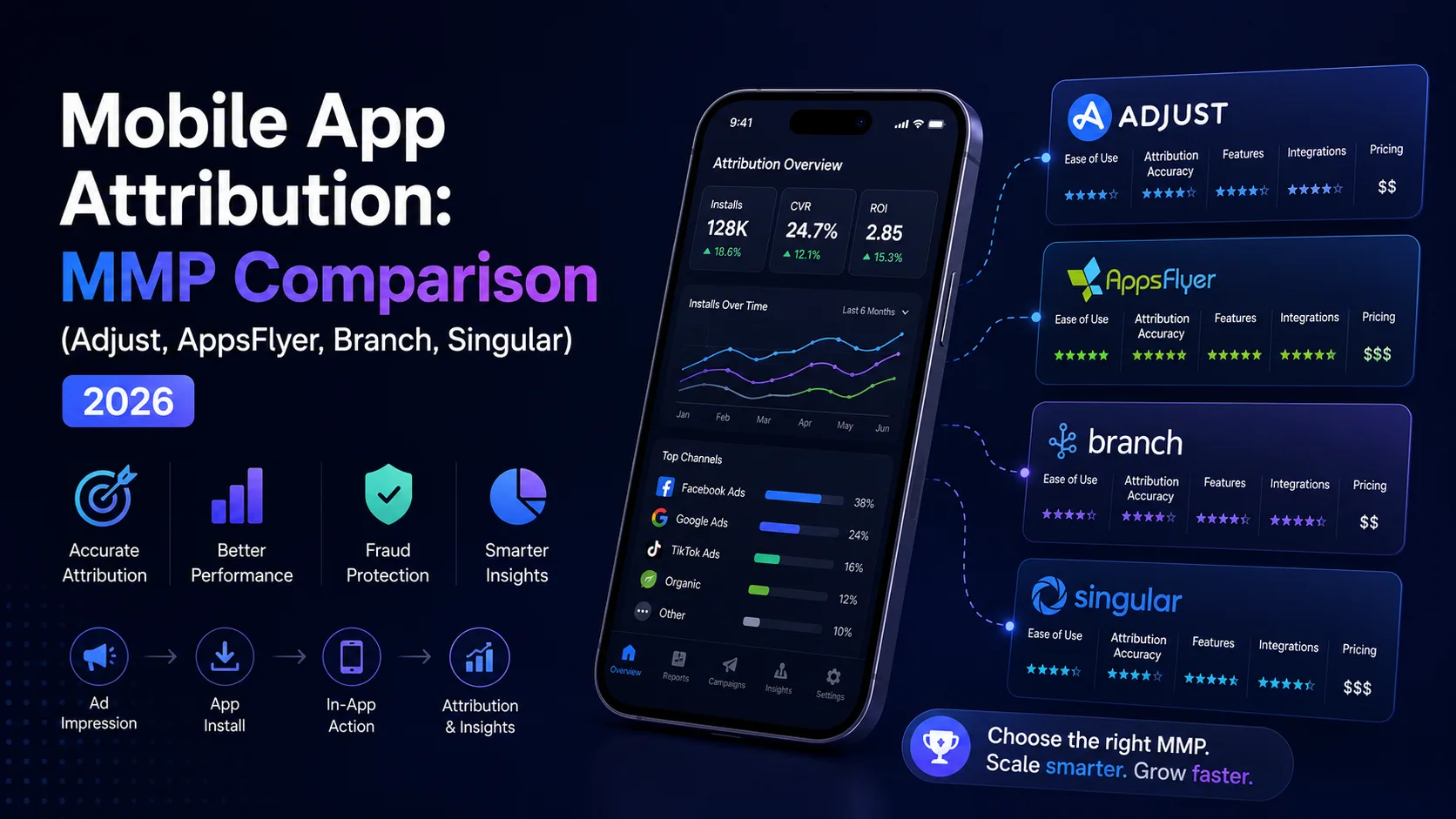
SKAdNetwork postbacks via your Mobile Measurement Partner (Adjust, AppsFlyer, Branch, Singular) or directly via Apple's Ads Attribution API for simpler setups. Without an MMP, ASA's own dashboard shows install attribution but not downstream revenue.
Should I run ASA in every country?
Start with your top 3–5 markets (US, UK, DE, FR, ES are common defaults). Expand to additional markets once campaigns are positive ROAS. ASA performance varies significantly by region.
What's the difference between ASA and Google App Campaigns?
ASA targets users on the App Store specifically — highest intent. Google App Campaigns runs across Google Search, YouTube, AdMob, and Google Display — broader reach, lower intent. Both work for different goals. ASA usually delivers higher per-install LTV; Google delivers more total volume.
The bottom line
Apple Search Ads is the highest-intent paid acquisition channel for iOS apps in 2026, with CPI averaging $1.80 across categories and a 6.8x range from $1.24 in casual games to $8.44 in finance. For indie developers, ASA is sustainable when your LTV × target ROAS exceeds your category CPI — measure both before spending. Start with branded defense, add category discovery in week 3, and add competitor conquest only once the first two campaigns are producing useful data. Don't kill subscription campaigns before day 60; the data to evaluate ROAS literally doesn't exist yet. And remember: low CPI doesn't mean high ROAS, and a high CPI with strong LTV is more valuable than cheap installs that don't monetize. Spend the first week building learning data, not chasing optimization metrics — the right time to optimize is month 2, not week 1.
ASA is a multiplier on apps with strong fundamentals. For the listing fundamentals that make ASA work, our screenshots that convert guide and rating optimization guide cover the levers that improve both tap-through rate and conversion rate. For organic ASO that compounds alongside paid acquisition, the 100-character keyword guide covers the metadata side. And once paid acquisition is producing positive ROAS, our subscription pricing guide covers the LTV lever — every dollar of LTV improvement directly raises your maximum sustainable CPI.
Related posts
Make your App Store screenshots free
LaunchShots is a free, in-browser screenshot maker. No signup, no watermark.
Open the app →
Comments (0)