TikTok Ads for Apps 2026: The Indie Developer Playbook
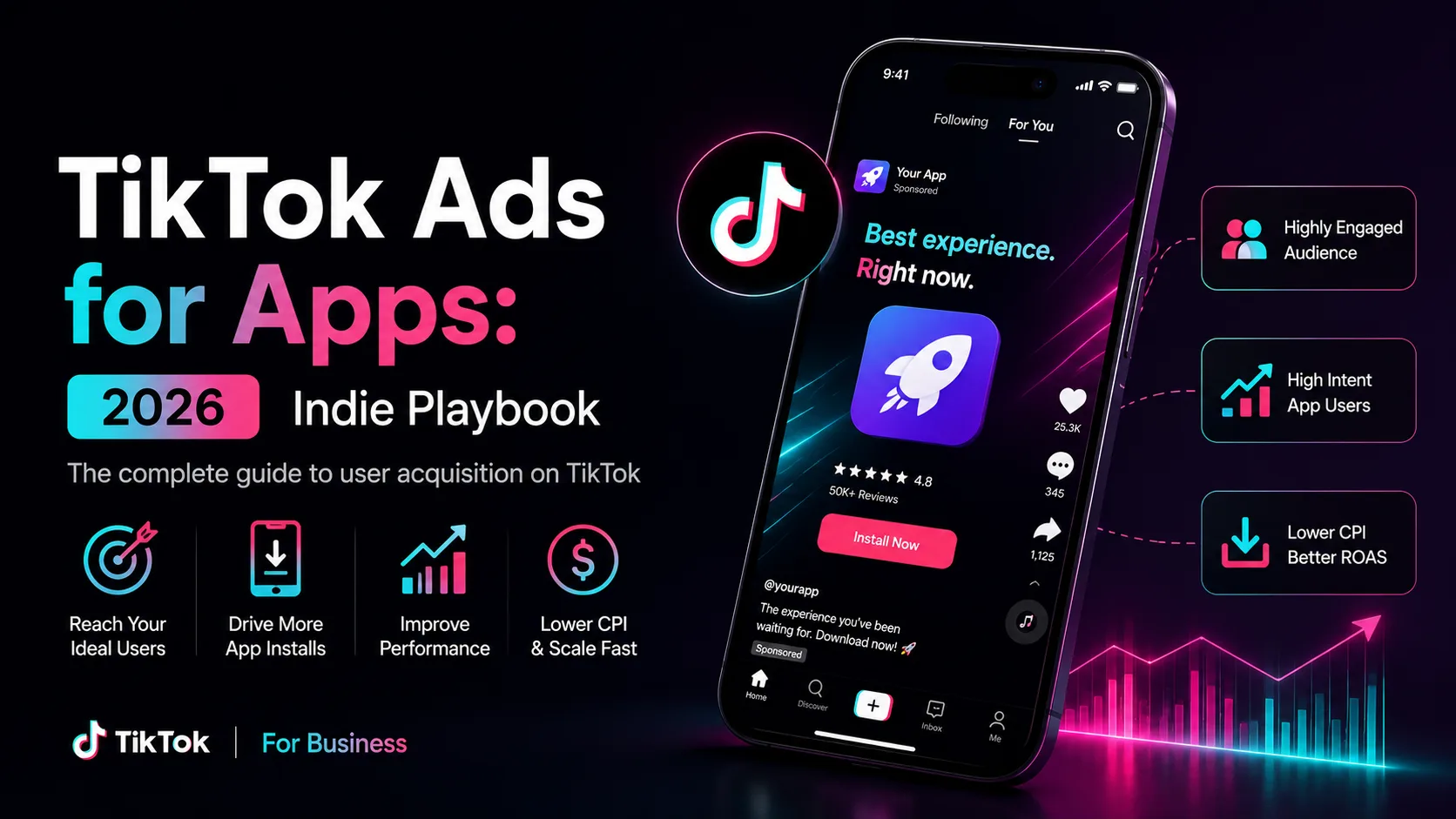
TikTok is the cheapest mainstream paid acquisition channel for apps in 2026 — and the gap isn't small. Median CPI sits at $0.50–$1.80 across consumer apps, with mobile gaming installs reaching a $3.20 median that AdLiftr describes as "the lowest we have seen in any major social network this cycle." Meta runs 30–50% more expensive on installs. Apple Search Ads runs 2–3x more expensive on installs. Google App Campaigns runs 30–80% more expensive on installs depending on category. The catch: TikTok's median ROAS sits at 2.21x — lower than Google's 3.31x and roughly even with Meta's 2.19x — meaning lower CPI doesn't automatically translate to higher returns. The apps winning on TikTok in 2026 are the ones that produce UGC-style creative at volume, run Spark Ads (28% lower CPA than In-Feed), and optimize for App Events rather than installs alone. This is the operator-level guide for indie developers in 2026: where TikTok structurally wins, the creative formula that consistently produces sub-$1 CPI, the four-platform paid acquisition portfolio that includes TikTok alongside ASA, GAC, and Meta, and the regional reality that makes TikTok especially valuable in markets where Meta is restricted.
What TikTok Ads for app install actually is
TikTok Ads for app install runs across TikTok's main feed, Spark Ads (boosted organic posts), and Pangle (TikTok's audience network of partner apps). The 2026 product family for app marketers:
- App Promotion campaigns: The standard structure. You select the App Promotion objective, connect your app via App Store or Google Play link, and run video ads that direct users to install.
- Smart+ Campaigns: TikTok's AI-driven automated campaign type, equivalent to Meta's Advantage+ App Campaigns. Smart+ automates audience, creative testing, and placement optimization. Default starting point for indie developers in 2026.
- Spark Ads: Boost existing organic TikTok posts as paid ads. They retain native engagement (likes, comments, shares) and consistently outperform standard In-Feed ads. CTR is 1.92x higher and CPA is 28% lower than non-Spark in AdLiftr's 2026 dataset.
- In-Feed Ads: Standard ads that appear in the For You feed alongside organic content. Without Spark optimization, these underperform.
- Pangle: TikTok's audience network — extends reach across partner apps and websites. Lower CPI but lower quality. Run in separate ad groups so you can see the difference.
- TikTok Pixel + Events API: TikTok's attribution infrastructure. Server-side events via Events API improve signal quality post-ATT. Without it, iOS attribution is severely handicapped.
The shorthand: TikTok is the cheapest, fastest-growing, most creative-dependent paid acquisition channel for apps in 2026. It works when your visual creative is strong, your audience skews young, and your content can pass as native TikTok feed material.
The 2026 CPI benchmarks: where TikTok actually sits
Real benchmarks from AdLiftr (3,127 campaigns across 548 advertisers), TikAdTools, Admetrics, and AppsFlyer 2026 data:
TikTok CPI by category:
- Hypercasual games: $0.30–$0.80 (lowest of any platform).
- Casual games: $0.80–$2.50 (median around $3.20 across all gaming).
- Mid-core games: $2.50–$5.
- Photo & Video: $1–$3 (TikTok-native category, strong fit).
- Beauty / Fashion: $1.50–$4 (strong TikTok fit; UGC-driven).
- Lifestyle / Wellness: $1.50–$4.
- Health & Fitness: $2–$5.
- Education: $2–$4.
- Productivity / Tools: $3–$8 (weaker TikTok fit; harder to demonstrate value in 15 seconds).
- Fintech / Banking: $5–$12 (mid-range; incumbent bidding but lower than Meta).
- B2B SaaS: $5–$15 (weakest fit; audience mismatch).
The pattern: TikTok consistently runs 30–50% cheaper than Meta and 50–70% cheaper than ASA on raw CPI. But the bottom-quartile gap is overwhelmingly creative-driven. Top 25% of advertisers run CPI 30–60% below median; bottom 25% pay 2–3x median. Creative quality and Spark Ads adoption explain most of the gap.
Geographic variation:
- Tier 1 (US/UK/CA/AU): Baseline CPI above.
- Tier 2 (Western Europe, Japan, Korea): 20–40% lower.
- Tier 3 (SEA, LATAM, India, Turkey, MENA): 60–85% lower — and these are markets where TikTok often outperforms Meta significantly.
The honest comparison: TikTok vs ASA vs GAC vs Meta
The four-platform 2026 paid acquisition landscape, role by role:
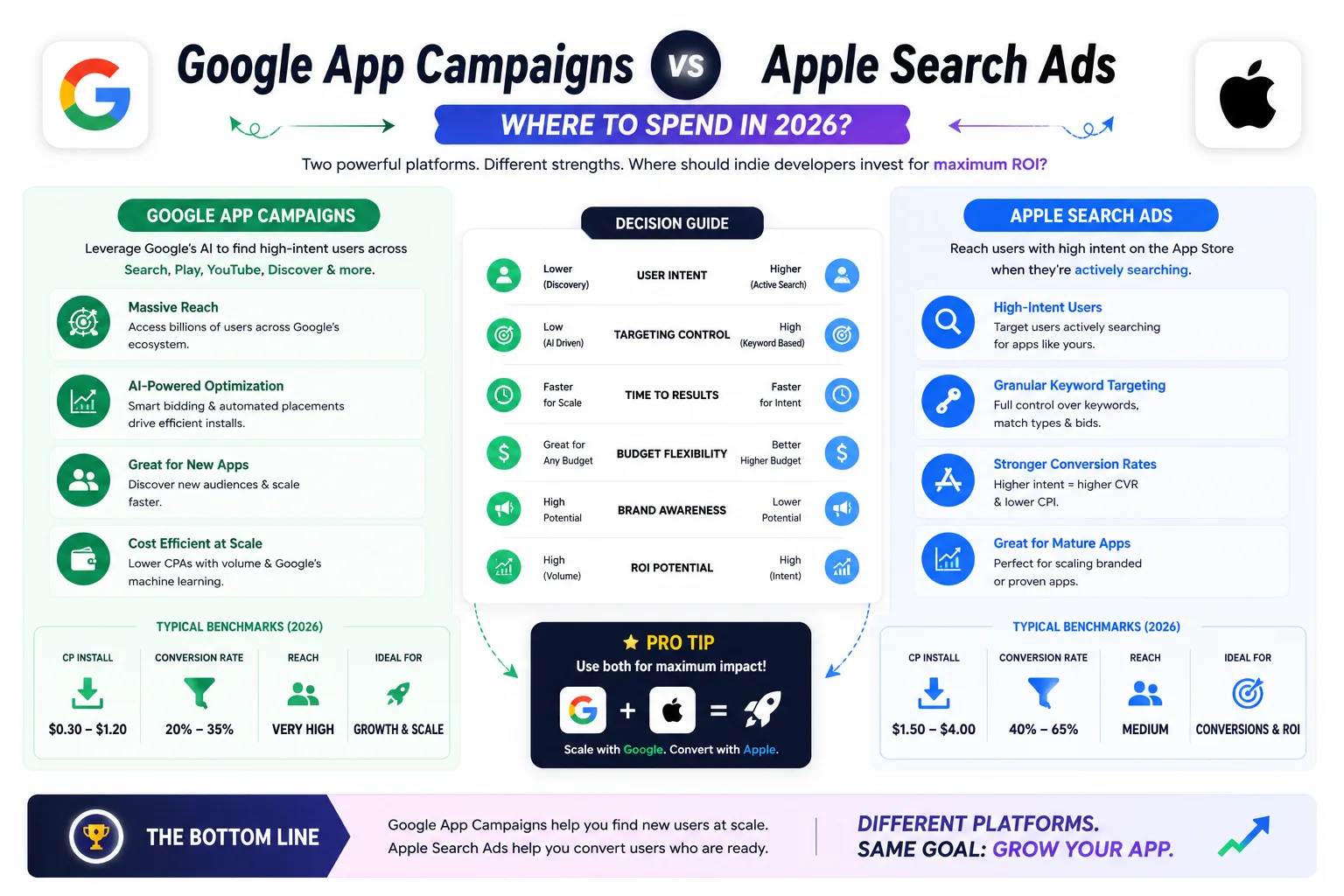
- Apple Search Ads (ASA): Bottom-funnel, iOS-only, highest-intent. CR 67.2%. CPI $1.80 avg. ROAS 3.31x median. Wins on quality.
- Google App Campaigns (GAC): Cross-platform, mixed-funnel, broadest reach. CPI $1.29 avg. ROAS 2.19x. Wins on scale.
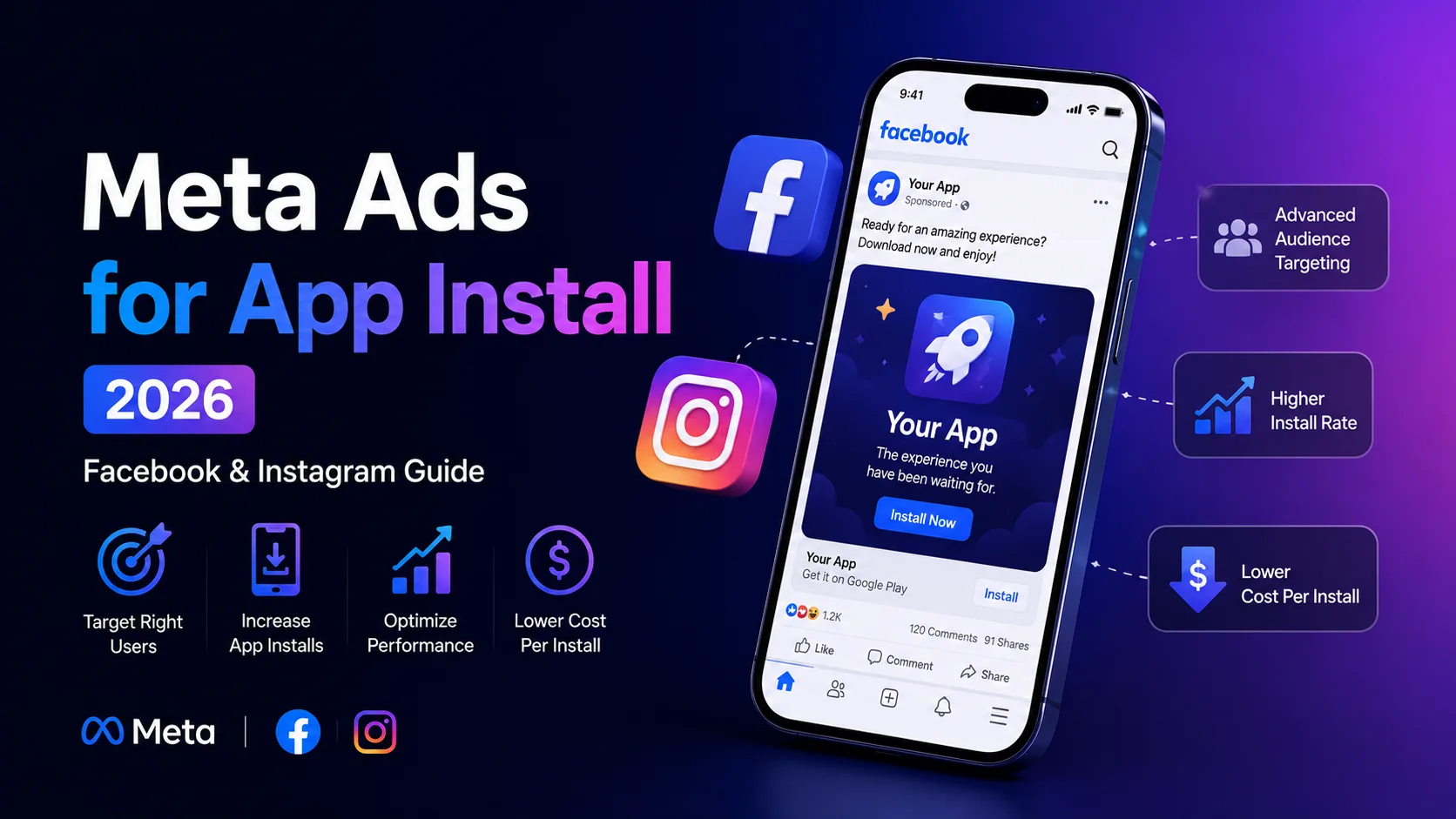
- Meta Ads (Facebook + Instagram): Cross-platform, top-to-mid funnel, demographic targeting. CPI $0.50–$3 consumer / $3–$15 productivity. ROAS 2.19x. Wins on visual creative reach.
- TikTok Ads: Cross-platform, top-funnel, interest + behavior targeting. CPI $0.50–$1.80 most categories (cheapest mainstream). ROAS 2.21x. Wins on cost efficiency and emerging market reach.
The mature 2026 four-platform allocation: roughly 40% ASA, 25% GAC, 20% Meta, 15% TikTok for cross-platform indie apps with strong visual creative. The TikTok share grows for apps targeting Gen Z and Millennial audiences, gaming, beauty, fashion, and emerging markets. The TikTok share shrinks for productivity tools, B2B apps, and Tier 1 high-LTV verticals where Meta's audience targeting outperforms.
For the foundational deep dives: Apple Search Ads ROI, GAC vs ASA allocation, and Meta Ads for app install. This guide picks up the fourth leg.
Where TikTok Ads structurally wins
Despite the moderate ROAS, there are specific situations where TikTok decisively outperforms ASA, GAC, and Meta:
- Your audience is young. Gen Z and younger Millennials live on TikTok. If your app targets users under 35, TikTok reaches them more efficiently than Meta or Google.
- Your app fits short-form video natively. Photo apps, beauty, fashion, food, fitness, gaming, music, education with strong visual demos — these convert in 15-second vertical video. Anything that benefits from "show, don't tell" wins on TikTok.
- You operate in emerging markets where Meta is restricted or weak. Turkey, China (Douyin), Russia, parts of MENA, parts of SEA — TikTok dominates where Meta has limited reach. The CPI advantage compounds with audience advantage.
- You can produce UGC-style creative. TikTok's algorithm rewards content that looks native to the platform. Phone-recorded testimonials outperform polished studio production by 40% in CTR. If you can produce or commission UGC at scale, TikTok is your highest-leverage platform.
- You're testing creative concepts quickly. TikTok's algorithm gives early signal faster than other platforms. You can validate 5–10 creative concepts in a week's spend.
- Your category benefits from viral discovery. Apps that build word-of-mouth on social — beauty tools, recipe apps, language learning, fitness, productivity hacks — get organic lift from TikTok ads that doesn't show up in last-click attribution.
- You're growth-stage and need volume. TikTok's combination of low CPI and high reach makes it the volume play of 2026. If you need 50K+ installs/month, TikTok scales without the CPI inflation Meta sees at similar volume.
Where TikTok Ads structurally loses
Equally honest about when TikTok isn't the right fit:
- Your audience is enterprise or B2B. Decision-makers in business categories aren't on TikTok during work mode. CPL/CPA inflates dramatically. LinkedIn or Meta perform better.
- Your value prop requires text explanation. Developer tools, complex productivity utilities, accounting apps — the 15-second video format can't carry the explanation. ASA's intent-driven search audience handles these better.
- You can't produce native-feeling creative. TikTok punishes ads that feel like ads. Polished brand-only content underperforms by 40%+. If you can only produce that, TikTok's auction will be expensive.
- Your audience is 45+. TikTok's user base skews younger. The 45+ demographic exists but is smaller and more expensive to reach than on Meta.
- You need same-day attribution clarity. TikTok's iOS attribution via SKAdNetwork has 24–72 hour delays. Daily optimization on iOS is noise.
- Your category is over-saturated with TikTok-native incumbents. Beauty and fashion DTC, certain gaming verticals — auction pressure has driven CPI up significantly. Indies competing here pay premium.
- You don't have TikTok Pixel + Events API implemented. Without server-side event tracking, iOS performance is severely handicapped. Same CAPI requirement as Meta.
The Spark Ads strategy that consistently wins
The single biggest TikTok product feature for app marketers in 2026: Spark Ads. The 2026 data on Spark vs non-Spark performance:
- CTR 1.92x higher. 1.62% Spark vs 0.84% standard In-Feed in AdLiftr's 2026 dataset.
- CPA 28% lower on average. Material difference driven by native engagement signals.
- Higher organic spillover. Spark Ads accumulate likes, comments, shares — which feed back into organic distribution. A successful Spark Ad keeps generating organic reach after the paid campaign ends.
- Lower creative fatigue. Posts that already perform organically have proven hooks. Less creative fatigue than fresh ad creative.
How to source Spark Ads:
- Boost your own organic posts. If you run a TikTok account for your app, your best-performing organic posts are pre-validated ad creative. Boost them with App Promotion objective.
- Partner with creators. Creator-led UGC posts about your app, then boost them as Spark Ads with creator authorization. Creator-led Spark Ads typically outperform brand-led Spark Ads by 30–50%.
- UGC platforms. Services like Insense, Trend, JoinBrands aggregate creator-generated content. Use this content as Spark Ads after securing authorization.
- Influencer collaborations with whitelisting. Larger creator partnerships often include whitelisting rights — running ads from the creator's account. Same Spark Ads mechanism, larger creator equity.
The takeaway: if you're not running Spark Ads in 2026, you're leaving 28% lower CPA on the table. Start every TikTok app campaign with Spark Ads as the default, not the experiment.
The creative formula that produces sub-$1 CPI
TikTok's algorithm requires creative volume and creative quality together. The patterns that consistently produce strong CPI in 2026:
- Hook in the first 1.5 seconds. If users scroll past, nothing else matters. Open with a question, surprising claim, recognizable face, transformation moment, or pattern-interrupting visual.
- 15-second vertical video. The 2026 sweet spot. Shorter feels rushed; longer loses attention. 7–15 seconds is the high-performing range for app install.
- Phone-in-hand demos. Show someone actually using your app on camera, not just screen recordings. Screen-only recordings perform measurably worse.
- Native-feeling content. Looks like a regular TikTok post, not a polished commercial. Trending audio, quick cuts, on-screen captions, casual production value.
- UGC-style creative. Real people talking about the app. "I tried [app] and here's what happened" outperforms branded value-prop ads.
- Trending audio. Use audio that's currently trending on TikTok. The algorithm gives extra distribution to content using trending sounds. Check the TikTok Creative Center for current trends.
- Captions on screen. 60%+ of TikTok users watch with sound off, especially during initial scroll. On-screen captions retain those viewers.
- Multiple variants weekly. Top performers ship 5–15 new creative variants per week. The algorithm needs variation to find winners. Single-creative campaigns starve.
The CPA gap between top-quartile and bottom-quartile advertisers on TikTok in 2026 is overwhelmingly explained by creative discipline. Same audience, same budget, same product — creative wins or loses the auction.
App Event Optimization: switching from installs to downstream events
The single highest-leverage optimization shift on TikTok in 2026: switching from install-volume bidding to App Event Optimization (AEO). The progression:
- Days 1–14: Optimize for installs. Goal: collect 50+ install events to exit learning phase. Use Smart+ with broad targeting.
- Days 14–30: Once you have 50+ installs in 7 days, switch optimization to a downstream event — registration, first session, tutorial complete. AEO finds users likely to complete the deeper event, filtering out low-quality installs.
- Days 30+: Once you have 50+ deep events per week, switch optimization to revenue events — first purchase, subscription trial start, completed purchase. Value Optimization finds high-LTV users.
The Checkmate case study from TikTok for Business documented a 43% reduction in CPA after switching to creator-led Spark Ads + App Event Optimization combined. AEO without Spark Ads underperforms; Spark Ads without AEO underperforms. The combination wins.
For most indie developers, the upgrade sequence is: install volume bidding → registration optimization → purchase/subscription optimization. Each step requires sufficient event volume — don't switch prematurely or the algorithm starves.
iOS attribution and the SKAdNetwork reality
TikTok faces the same post-ATT challenges as Meta on iOS. The 2026 solution stack:
- TikTok Pixel: Standard browser/SDK-based attribution. Limited post-ATT.
- TikTok Events API (server-side): The CAPI equivalent. Sends conversion events server-to-server, bypassing browser/SDK gaps. Required for accurate iOS attribution.
- SKAdNetwork integration: TikTok supports SKAN 4.0 with multiple postback windows. Cohort-style attribution, not per-install.
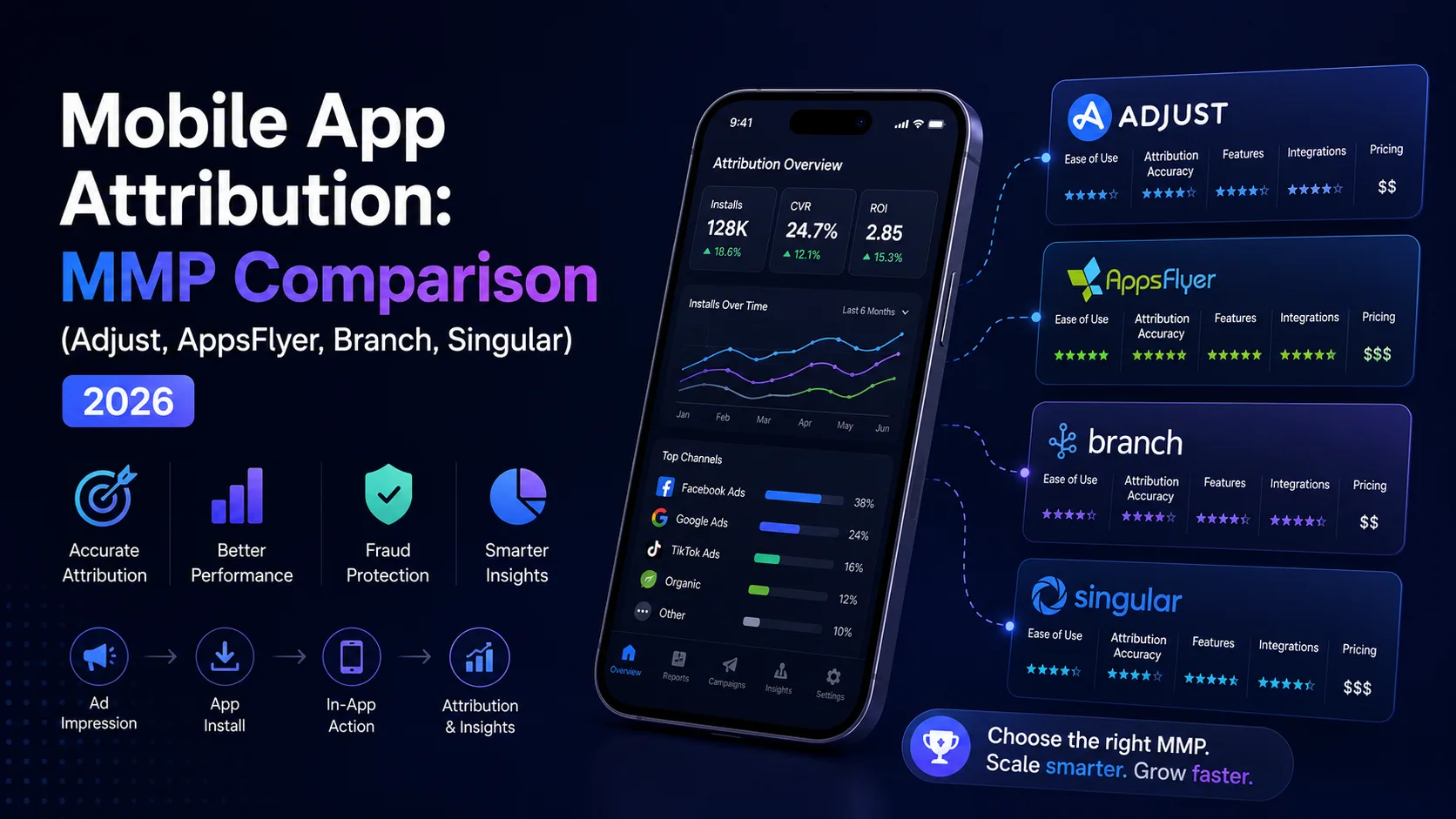
- Self-attributing networks (SANs): TikTok integrates with Adjust, AppsFlyer, Branch, Singular for attribution. MMP integration recommended for serious iOS campaigns.
What this means operationally:
- iOS attribution is delayed 24–72 hours. Don't optimize daily on iOS TikTok campaigns.
- Day 1 ROAS on iOS is misleading. Use D7 or D30 cohort ROAS for evaluation.
- Events API + MMP is the standard. Without server-side event tracking, iOS underperforms 10–20%.
- Android attribution is cleaner. Run Android campaigns with confidence; iOS requires more patience and infrastructure.
For the broader MMP comparison covering Adjust, AppsFlyer, Branch, and Singular, our future MMP guide will cover the build-vs-buy decision. For now: use an MMP. The cost is small compared to the attribution accuracy improvement.
The bid strategies that work for indie apps
TikTok exposes three main bid strategies:
- Lowest Cost (default): TikTok maximizes results for your budget without a cap. Use during initial learning phase (first 30 days). Best for collecting baseline data.
- Cost Cap: Sets a maximum average CPA. TikTok tries to keep average CPA at or below your cap. Use once you have stable baseline data from Lowest Cost campaigns.
- Bid Cap: Sets a maximum bid in any auction. Tighter control but reduces volume significantly. Use only when you need strict per-conversion cost control.
The progression:
- Days 1–30: Smart+ with Lowest Cost. Collect data.
- Days 31–60: Cost Cap at 1.5–2x your day-30 average CPA. Tighten as data accumulates.
- Days 60+: Add value-based optimization once you have 200+ revenue-attributed conversions. Run parallel campaigns to compare Cost Cap vs Value Optimization.
Never use Bid Cap without at least 500 historical conversion events. Below that threshold, the manual cap is more constraining than helpful.
The Turkey, India, and emerging markets reality
One of the most important regional facts in 2026 paid acquisition: TikTok dominates in markets where Meta is restricted or weak. The list:
- Turkey: Meta has restricted access; TikTok is the dominant social platform for Gen Z and Millennials. Pangle (TikTok's ad network) is the strongest indie ad network locally alongside AppLovin.
- China: Different app (Douyin) but same parent company. ByteDance ad ecosystem dominates Chinese mobile.
- India: TikTok was banned in 2020 but the ecosystem (Pangle integration via other apps) remains. Meta is also strong; CPCs are 70–85% lower than Tier 1.
- Indonesia, Philippines, Vietnam: TikTok is the #1 social platform. Meta competes but TikTok leads on engagement and CPI efficiency.
- Mexico, Brazil: TikTok rapidly growing; Meta still dominant but TikTok closing the gap.
- MENA region: TikTok strong; Meta strong; both compete. Local market specifics matter.
For indie developers targeting these markets, TikTok is often the highest-ROI paid channel — not because it's universally better but because the regional dynamics favor it. Don't apply Tier 1 allocation frameworks blindly; adjust for where your users actually live.
Common mistakes that destroy TikTok returns
Patterns that consistently burn indie TikTok budget:
- Running In-Feed ads without Spark optimization. 28% higher CPA without Spark. Use organic posts (yours or partnered creators') as the base layer.
- Ignoring TikTok Events API on iOS. 10–20% CPA penalty from incomplete attribution. Same CAPI requirement as Meta.
- Producing 2 creatives and hoping they work. TikTok needs volume. 5–10 creatives minimum; 30+ for serious scaling.
- Using polished commercial creative. Underperforms UGC-style by 40%+. Native-feeling content wins.
- Killing campaigns at 7 days. Learning phase takes 14+ days. Premature shutdowns destroy compounding optimization.
- Optimizing on Install alone. Lowest-CPI campaigns often have worst D7 retention. Switch to AEO once you have 50+ events/week.
- Mixing Pangle with feed placement. Pangle traffic behaves differently. Run in separate ad groups.
- Manual narrow audience targeting. TikTok's algorithm finds your audience faster with broad targeting + Smart+. Manual restrictions hurt more than help.
- Last-click iOS attribution. Broken since 2021. Use D7/D30 cohort attribution for iOS TikTok.
- Running TikTok in markets where it's weak. Tier 1 productivity apps targeting business audiences won't get TikTok ROI. Match channel to audience.
When NOT to run TikTok Ads
Honest cases where TikTok isn't the right next step:
- You don't have ASA or GAC running profitably yet. TikTok adds complexity. Master the simpler channels first.
- Your creative production capacity is zero. TikTok needs creative velocity. Without it, you'll underperform other platforms consistently.
- Your app targets 45+ enterprise decision-makers. Wrong audience. Meta or LinkedIn perform better.
- Your app is under 4.0 stars. Same conversion-rate ceiling as Meta. Fix ratings first — see our rating optimization guide.
- You can't invest in Events API + MMP. iOS performance without infrastructure is poor.
- Your value prop requires text explanation. Developer tools, complex B2B utilities — wrong format fit.
The 2026 indie sequence: organic ASO foundation (see our complete ASO guide) → ASA branded defense → GAC for scale → Meta as visual broad-reach → TikTok as cost-efficient emerging-market/young-audience play. Skip steps and you'll burn budget faster than you learn.
Frequently asked questions
What's the average CPI on TikTok in 2026?
$0.50–$1.80 for most consumer apps, with mobile gaming at $3.20 median. iOS runs slightly higher than Android. Tier 2 markets are 20–40% cheaper than Tier 1; Tier 3 markets are 60–85% cheaper. TikTok is consistently the cheapest mainstream paid channel.
What are Spark Ads and why do they matter?
Spark Ads boost existing organic TikTok posts as paid ads, retaining native engagement (likes, comments, shares). They deliver 1.92x CTR and 28% lower CPA than standard In-Feed ads in 2026 data. Never run TikTok app campaigns without Spark Ads — the gap is too large.
Do I need Events API implemented on iOS?
Yes for serious iOS performance. Without server-side event tracking, you see 10–20% higher CPA from incomplete attribution. Same requirement as Meta CAPI.
What's the minimum budget to test TikTok Ads?
$30–$50/day for 30 days = $900–$1,500 minimum. Below this, the algorithm starves and you can't separate signal from noise. The first 14 days are pure learning phase.
How does TikTok compare to Meta for app installs?
TikTok runs 30–50% cheaper CPI but with slightly lower median ROAS (2.21x vs Meta's 2.19x — roughly even). TikTok wins on cost and emerging markets; Meta wins on Tier 1 broad-demographic targeting. Both can coexist in a mature portfolio.
Should I use Pangle?
Yes, but only in separate ad groups from feed placement. Pangle extends reach with lower CPI but lower quality. Mixing the two in one ad group makes both harder to optimize. Test separately.
What's the best creative format for TikTok app install?
15-second vertical video with hook in first 1.5 seconds, UGC-style production, phone-in-hand demo of the app working, trending audio, on-screen captions. Polished brand video underperforms by 40%+.
How many creatives do I need monthly?
Minimum 5–10 creatives per month for Smart+. Top performers ship 20–60+ creatives monthly. Creative velocity is the single biggest CPI lever on TikTok.
How long does TikTok need to optimize?
14 days minimum for learning phase. 30–60 days for stable CPI signals. iOS attribution adds 24–72 hour delays, so D7/D30 cohort evaluation is the right window — not daily.
Is TikTok worth running in markets where it's restricted?
No. In markets where TikTok is banned or restricted (some Indian use cases, restricted EU/US contexts), use Pangle integration via other apps or shift budget to Meta and local networks. Match channel to regional reality.
The bottom line
TikTok Ads is the cheapest mainstream paid acquisition channel for apps in 2026 — and the gap is real. Median CPI sits 30–50% below Meta and 50–70% below Apple Search Ads, with mobile gaming reaching $3.20 median (the lowest in any major social network). But cheap CPI alone doesn't translate to high returns: TikTok's median ROAS of 2.21x sits roughly even with Meta's 2.19x. The apps winning on TikTok produce UGC-style creative at volume, run Spark Ads (28% lower CPA than In-Feed), optimize for App Events rather than installs alone, and implement Events API for iOS. TikTok especially dominates in emerging markets where Meta is restricted (Turkey, parts of MENA) or weak — making it the highest-ROI play for indie developers targeting those regions. The 2026 four-platform paid portfolio for cross-platform indie apps: 40% ASA, 25% GAC, 20% Meta, 15% TikTok as a baseline, with TikTok share growing for young-audience, visual-creative, or emerging-market apps.
TikTok plugs into the broader acquisition picture. For the full paid landscape: Apple Search Ads ROI covers iOS-first intent-driven acquisition, GAC vs ASA covers cross-platform allocation, and Meta Ads for app install covers the visual broad-reach play. For the LTV math that determines your maximum sustainable CPI on any platform, the subscription pricing guide and churn guide cover the inputs. And for the ASO foundations that compound alongside paid spend, the complete ASO guide ties everything together.
Related posts
Make your App Store screenshots free
LaunchShots is a free, in-browser screenshot maker. No signup, no watermark.
Open the app →
Comments (0)